Tuesday, March 28, 2017

Meeting of March 27, 2017


We met at Carla's to discuss Jolene's book choice The Mockingbird Next Door - Life with Harper Lee by Marja Mills.  Present were Carla, Colette, Beth, Betty, Janet, Jolene, Michèle and Shirley.  Carla served some wonderful cheese and a nice variety of crackers along with a kale dip, a warm artichoke dip and spicy jellies.  Of course there was wine and with tea and coffee Carla served a wonderful pavlova.  We are spoiled!

Some changes to our schedule were made and Linda, who is enjoying the warmth of Florida has proposed along with her book choice for May, an excursion!  Take a look at our 2017 list of book choices and see if you can guess where we are going!  Make sure you check back in May to read about our great outing!

One of Jolene's favourite books and for many of us, is To Kill a Mockingbird by Harper Lee.  So a memoir about Harper Lee was an obvious choice for her this year. The author, Marja Mills is a journalist who has worked for the Chicago Tribune.  As part of a Chicago project to encourage citizens to read To Kill a Mockingbird, Ms. Mills requested and received permission to interview the Lee sisters Harper and her older sister Alice.  After the article appeared in the Chicago Tribune, Ms. Mills sent it to the Lee sisters and then developed a friendship with them eventually renting the house next door to them for 14 months.

The Mockingbird Next Door is a memoir of Ms. Mills' experiences and the friendship that developed with the Lee sisters over those 14 months and not a biography of Harper Lee.  Alice, Harper's older sister and their friends that she meets are the bigger source of stories about Harper Lee.  Harper, known much more as Nelle, told some stories, took Ms. Mills along with he on excursions such as fishing at a friend's farm but always refused to be taped and often said, this is not to be printed.  Both sisters were very good storytellers and the book has many stories about life in Monroeville and its residents.

When Penguin Press announced that the book would be published and later when it was  published in 2014, a statement from Harper Lee was published in which she said that she had never authorized the publication.  The statement created a controversy and there were questions as to who had pressured Harper Lee to send out the statement.

Most of us enjoyed the book though many thought that it could have used more editing.  Many found the stories of their daily lives, relationships with friends and family endearing.  It was also interesting to read about Nelle's friendship with Truman Capote and her involvement in research for Capote book In Cold Blood.  We also learn a bit about Nelle's friendship with Gregory Peck who played Atticus Finch in the movie To Kill a Mockingbird..  A couple of us did not find it particularly interesting and thought the author wrote too much about herself.

In the end, this book generated a lot of discussion about new genres in memoirs and biographies, that not only speak of the subject of the memoir but also the author of the book.  As always, we enjoyed our discussions.  Thank you Jolene for the book choice and thanks to all members of the Muse & Views Bookclub, the best there is!


Tuesday, February 28, 2017

Meeting of February 27, 2017


We met at Janet's home to discuss Carla's choice The Wonder by Emma Donoghue.  Present were Betty, Carla, Colette, Janet, Jolene, Michèle and Shirley.   Janet was tempted to serve us just 2 teaspoons of water and porridge but lucky for us relented and served some wonderful cheese including an irish  cheddar,  sausage rolls and a quite wonderful Irish whisky cheese cake.  Of course wine, coffee and tea were also served.

Carla gave us a short biography of Emma Donoghue who is the author of the very popular novel Room.  She was born in Ireland and lived in England and has settled in London, Ontario.  Ms. Donoghue has written several books and will publish this coming Spring her first YA book.

The novel is set in the Irish midlands in the 1860's not long after the potato famine in a village steeped in superstitions and the mysteries of the catholic faith. A young 11 year old girl, Anna O'Donnell, has stopped eating and after four months the curious and believers have begun to visit to witness this "miracle" or "medical anomaly" since she seems in good health.  The notable men of the village, the priest, the doctor and others decide that there needs to be proof that she is not eating and hire an English Nightingale trained nurse Elizabeth Wright and a nun to watch Anna over a two week period.  Lib, the nurse decides immediately that this is a hoax and in a couple of days she will be able to discover how Anna is secretly fed.

It is safe to say that this is not the most popular book we have read as a group.  Only two of our members present actually enjoyed the book.  It was for these two members a page turner, a suspense novel with an interesting plot line and believable characters.  The bleakness of the countryside and the difficult lives of the poor in villages just coming out of the potato famine were well described.

However, the majority were more critical of the book.  Many felt that there was too much of the book described Lib, the Nightingale trained nurse, watching Anna O'Donnell the 11 year old child who refuses to eat.  They felt that it was very repetitive and that not much happened until the last third of the book when we discover why Anna is fasting and what Lib does to save Anna.  All of us found the ending unbelievable.  Could Anna really get her health both physical and mental back and live a happy life with these new parents in a new country?  Some also criticized the writing style using a third person narrative but allowing only the thoughts of Lib to be described.

Carla did some research on catholicism and purgatory and how you could get someone out of purgatory.  Anna prayed to get her brother to heaven and she envisioned them both in heaven together.  She repeats 33 times the same prayer hoping it will be enough to get her brother Patrick out of purgatory.

As is usual with a book that our members have mixed opinions, the discussion was lively and interesting.

Tuesday, January 24, 2017

Meeting of January 23, 2017


We met at Colette's home to discuss Janet's book choice Commonwealth by Ann Patchett.  Present were Beth, Betty, Carla, Colette, Jane, Janet, Jolene, Michèle and Shirley.  Colette served a very nice variety of cheese and crackers, stuffed mushroom caps, melon wrapped in proscuitto and wonderful sautéed shrimp.  Red and white wine was served and afterwards, coffee, tea and a beautiful blueberry pie with ice cream.

The first order of business was the 2016 "academy award" for the best book of the year.  Six books were nominated but Carla's choice A Man Called Ove dominated with 5 of the 10 votes.  Congratulations Carla!

Here are some interesting facts about our Bookclub's reading this past year.  We read a total of 9 books as per usual, for a total of 3 045 pages!  We read six novels of which one is considered a classic (One Hundred Years of Solitude), and three non-fiction books.  Four of our books were written by Canadian writers.

Janet gave us a short biography of Ann Patchett.  She has written several books including Bel Canto that the Bookclub read in 2005.  She is the recipient of numerous awards and fellowships including The Women's Prize for Fiction, previously known as the Orange Prize and now called the Bailey's Prize.  She won for her book Bel Canto.  Among many other prizes and fellowships she also received the Guggenheim Fellowship for creative arts in 1995.  She has written seven novels and six non-fiction books. Ms. Patchett lives in Nashville and is co-owner of an independent bookstore called Parnassus Books. She is a big fan and promoter of independent bookstores.

Commonwealth is the story of six siblings from two families and how they coped with negligent parents and shuttling back and forth from California to Virginia.  The story develops over four decades and we learn how they coped as children and adults.  A tragedy when the kids are young affects all the children and the adults.  We learn more about the families when Frannie links up with a well known author and he writes a novel that is essentially the story of their families.

The comments were mixed and not many of our members enjoyed the novel.  However, several of us felt it was a good representation of the era when children were much freer to go out and explore the world.  It is of course an exaggerated representation.  The parents in this novel were extremely negligent.  It is difficult to understand parents who would leave a child self-medicate and let a gun in an easily accessible place.  Two of our members read the book twice and felt they could better connect the different parts of the story so that it made more sense.

Some felt that it was implausable that children of two families would get along so well, but what bonded them was the hatred for their parents.  It is a very sad story, a bit of a peek at a degenerative society of the '60s and '70s.


Wednesday, November 30, 2016

Meeting of November 28, 2016


We met at Beth's home to discuss Shirley's book choice,  Orphan Train by Christina Baker Kline. Present were Beth, Betty, Carla, Colette, Jane, Janet, Michèle and of course, Shirley.  Beth served very nice rolled finger chicken and beef sandwiches, a dip and vegetables, lovely olives and cheese.  She also served a wonder Irish apple cake.

Shirley introduced the author.  Christina Baker Kline was born in England and raised there and in the United States.  She studied literature at several American and British universities including Yale and Cambridge.  She also taught at several universities, literature, writing and women's studies.  She has written several books including 5 novels and several non-fiction books.   Orphan Train is her latest novel.  She presently lives in New Jersey with her husband and sons.

Ms. Kline's idea for this novel Orphan Train came from her mother-in-law's grandfather's story that she happened upon one holiday time when they were snowed in.  He had been as a child taken west from New York on a train.  The idea of taking children from New York to the mid-west came from a methodist minister who wanted to rid New York of underage criminals and vagrant children.  Taking them west would allow farm families in the mid-west to take the children in and would be free labour for them.  The program began in 1854 and went on to 1929.  After several years of research and interviews, Ms. Kline was able to create several characters such as Niam and Dutchy.  The novel begins in 2011 and there are two main characters, Vivian who is a 91 year old woman living in a huge old house and 17 year old Molly who is a ward of the Children's Aid Society living in a foster home.

The story begins with Molly who was caught stealing a library book and must do 50 hours of community work to pay for her sins.  She finds herself doing the community work by helping Vivian clean out her attic.  As the two begin to go through boxes, Vivian tells her story and her life as a child on an orphan train.

It was unanimous, all of us enjoyed the book.  We felt that the author had done considerable research not only about the Orphan Train project but also about the conditions in America for new immigrants, the conditions in Ireland that required many to immigrate. Beth said that the book had the feel of an old fashion novel.  The historical aspect of the novel satisfied the need of many of us to learn something from a book.  With the two characters Niamh Power and the young boy Dutchy that she meets on the train we are given good descriptions of what happened to many orphans who were given to families in the mid-west.  The descriptions of the families where Niamh finds herself are well developed and we find out quite a bit about the families  who went west in the late 19th and early 20th century. It gives us a good idea of how these children were treated both badly and well and how easily they were considered almost as "property", changing a child's name without hesitation.

Molly the 17 year old who comes into Vivian's life to help put order in the attic soon finds herself engrossed in Vivian's life.  As boxes are unpacked, we learn how Vivian coped and survived.  We also learn about Molly, who has lived and survived quite a lot in her 17 years.

Several of us talked about how a past can be seen to be better than it actually was.  Vivian talks about her life in Ireland before her family imigrated to America and paints a better picture than what was reality.  In the prologue, that begins "I believe in ghosts.." she talks about the positive things she remembres about her gram, her da and her mam.

We talked about the reasons there were so many orphans in the late 19th and early 20th centuries, many parents died young because of plagues, industrial accidents, children who were abandoned because families could not cope.  There are many classic novels written about orphans, two are mentioned in this novel,  Jane Eyre and Anne of Green Gables. There are others,  David Copperfield, Huckleberry Finn, Tom Sawyer and many others.  The old fashion feel of the book comes from the two main characters, Vivian and Molly who were in fact both  orphans.

Some of us liked that we learn what happened to everyone at the end.  We know that Maisie was adopted, married and had a family.  We know that Carmine was adopted by a good family.  Vivian meets the daughter she gave up for adoption.  Some of us however, wanted a few more chapters to find out how Vivian and her daughter got along, what happened to Molly as she aged out of the Children's Society system at age 18.

The discussion was lively and interesting.  Thank you Shirley for a good choice!


Tuesday, October 25, 2016

Meeting of October 24, 2016


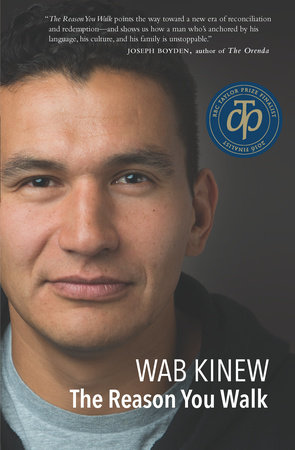
We met at Shirley’s home to discuss Jane’s choice, The Reason You Walk, by Wab Kinew.  Present were Jane, Shirley, Linda, Beth, Betty, Colette, Carla, and Jolene.  Shirley served  a wonderful selection of cold cuts, cheese, quacamole and dip, as well as meatballs, mini wild rice and mushroom quiche followed up with a delicious berry crumble and ice cream, all gluten-free.

Jane introduced the author as a rapper, chief, father, journalist, politician and university administrator.  He defended The Orenda on Canada Reads.  He holds a master’s degree in Indigenous Governance.

The Reason You Walk follows the lives of Wab and his father Tobasonakwut, himself a survivor of residential schools.  Tobasonakwut faces death with strength, courage, grace and forgiveness.  Reconciliation between father and son is also a large part of the story.

Reaction to the book was fairly uniform.  While the book was informative and interesting, the writing style was not very appealing.  Since the author is a good speaker on CBC, some wondered if an audio book would have been more effective.   We appreciated details about indigenous culture and the background to Truth and Reconciliation.  The ending, with Wab’s sons singing and telling their dying grandfather that they loved him, was moving and appreciated by all.  However, it would have been helpful to have more explanation about how Wab managed to manoeuvre so well between the indigenous world and outside culture. 

We had a good discussion about spirituality in the book.  The focus on fasting and prayer in native culture was gripping; however, the Sundance dances were hard to fathom, with flesh tearing so foreign to our group.  At one point, Wab’s father offered a feather to church leaders, a momentous gesture.  In answer to the criticism that Christ seemed absent from much of the depiction of Christianity, some pointed out that “the reason you walk” embodies Christian values—understanding of the Creator, His motivation, love, and our ultimate destination. 

 Because many in the group work daily with indigenous peoples, or have done so in the past, the educational value of the book compensated for its literary shortcomings.  One final comment was “the more you find out, the less afraid you are—on both sides.”

Monday, October 3, 2016

Books and Meetings 2017

The list will be updated as members choose their books

Monday January 23rd -  Janet's book choice, Commonwealth, by Ann Patchett, Colette hosting

Monday February 27th - Carla's book choice, The Wonder, by Emma Donoghue, Janet hosting

Monday March 27th - Jolene's book choice, The Mockingbird Next Door, Life with Harper Lee, by Marja Milles, Carla hosting

Monday April 24th - Michèle's book choice, Maman's Homesick Pie, by Donia Bijan, Jane hosting

Monday May 29th - Linda's book choice Matrons and Madams by Her Excellency Sharon Johnston, Linda hosting

Monday June 26th - Beth's book choice, Do Not Say We Have Nothing by Madeleine Thien, Jolene hosting

Monday September 25th - Colette's book choice, The Shipping News by Annie Proulx, Michèle hosting

Monday October 23rd -  Jane's book choice, The Chilbury Ladies' Choir by Jennifer Ryan, Shirley hosting

Monday November 27th - Shirley's book choice, Home Front by Kristin Hannah, Beth hosting

Tuesday, September 27, 2016

Meeting of September 26, 2016


This month's book was Colette's choice The High Mountains of Portugal by Yann Martel. Present were Beth, Carla, Colette, Jane, Janet, Jolene, Michèle and Shirley.  Jolene was our host.  She had on the floor part of food she had prepared for us, as Odo liked it in the third novella of this book.  She also wore a Portugal t-shirt and had other momentos from Portugal in the house. As it happens also, there is a painting of a rhinoceros on the wall of her home reminding us of the reference to the fables  rhinoceros in Portugal. We can always count on Jolene to set the mood! Jolene had a very nice variety of cheese and crackers, my favourite spread fig and walnut and excellent chicken and pineapple skewers.  She served us parfaits of vanilla ice cream with pineapple and strawberries.

Yann Martel divided this novel into three parts in three different eras, a story called Homeless with Tomas in 1904,  the second story Homeward set in the 1930's with pathologist Eusebio and the third story Home set in the 1980's with Canadian Senator Peter.  All three men are dealing with grief, loneliness and the loss of their wives and in Tomas' case also the death of his son and father.  Chimpanzees are present in all three stories, in passing through in Father Ullyses' diary in Homeless, more directly in Homeward with Eusebio stitching a chimpanzee along with a dog and his wife into a dead man's body following the autopsy and very prominently in Home with Odo the chimpanzee as Peter's constant companion.

Yann Martel has written this book in the literary genre of magical realism.  The Merriam-Webster online dictionary describes magical realism as a "style incorporating fantastic or mythical elements into otherwise realistic fiction."  There are certainly incredulous incidences in Martel's stories and several allegories related to love, loss faith and religion.

As a group, we were certainly divided.  The majority did not like the book.  They found the stories and their themes difficult to understand.  What was the meaning of Tomas' voyage to discover the religious icon?  What was the meaning of the difficulties he had.  In the second story, several, who know the bible well, found many inaccuracies in the bible references and therefore the comparisons with Agatha Christie's novels seem to make no sense.  What was the meaning of such a strange autopsy and what did it mean that Eusebio sewed back into the man's body, the chimpanzee, the dog and the wife? In Home, Peter's relationship with Odo the chimpanzee could be considered weird and the end leaves us with many questions, what does it mean when Odo holds Peter as Mary held Jesus after the crucifixion.  It was not a book that they enjoyed and some finished feeling somewhat inadequate.

A few of us enjoyed the book but it really meant reading the stories without questioning the meaning of the allegories and suspending your disbelief.  We have one member who has decided to eventually re-read the book with the intention of understanding the symbolism and the references to religion and faith. We may eventually have a further discussion about this book.

Despite the divergence of opinion there is great camaraderie in our group and there was no difficulty in accepting everyone's opinion.


Tuesday, June 28, 2016

Meeting of June 27, 2016


This month's book was Betty's choice A House in the Sky - A Memoir by Amanda Lindhout and Sara Corbett.  It is an account of Canadian independent journalist Amanda Lindhout's kidnapping in Somalia. Our host Linda had wonderful pinwheel sandwiches, cheese and crackers with smoked salmon.  Red and white wine of course, and a very nice New York style cheesecake with tea and coffee. Present were Beth, Betty, Carla, Colette, Jane, Jolene, Linda, Michèle and Shirley.

Ms. Lindhout has been in the news lately because one of her captors has been arrested in Canada by the RCMP and she has also given support to Alison Azer, the Canadian woman whose children were taken to Iran by her former husband.  Betty gave us a synopsis of the press articles that have recently appeared.  For example, Ms. Lindhout agrees that governments should not pay ransom money but she feels that family who choose to raise the money should not be harassed.

We had a very animated discussion about this memoir.  We agreed that the book was very well written, a page turner and as she recounted her experiences, there was not a feeling of "woe is me". It was written with clarity and power. Sara Corbett steered the writing style well.

However, we all felt that Amanda made several poor choices throughout her travels that finished with the worst choice she made when she went to Somalia despite being discouraged by several people including her mother and seasoned journalists.  We all felt that she was naive at best and stupid not to heed the opinions of others.  We disagreed somewhat on the reasons why she kept choosing more and more dangerous countries in her travels. Several were irritated and angry by her poor choices and lack of forethought. Some of us felt she had no real guidance as a child from her mother or her father.  Chaos, violence and uncertainty were the norm in her childhood. Her refuge was found in the National Geographic magazines that she read and she dreamt of seeing the world. For whatever reason, she chose countries that were more and more unstable as if she was convincing herself that nothing would go wrong.

We also discussed her on and off boyfriend, Nigel Brennan.  Few of us liked him, some did, but even though he was older than Amanda, we all felt he had a weak personality and easily manipulated.  He lied several times to avoid conflict with Amanda and other women in his life.  Nigel wrote a book in 2011, The Price of Life, co-written with his sisters.

During her captivity, Amanda was very resourceful and clever.  She used everything available to her to survive, to influence her kidnappers, to stay sane and to allow her to tolerate the indignities, the violence and cruelty she endured.  She convinced Nigel early in their captivity that it was to their benefit to convert to Islam. She requested English versions of the Koran for herself and Nigel. She learned the required prayers.  Until they were separated, she and Nigel befriended the young guards, learned about their life, their goals.  However when they were separated, the guards' attitude towards her changed. She was kept in a dark room, she could no longer read. Any small pleasures she had such as scented soaps, were taken away and Amanda was raped and beaten.  During this period she coped by making mental lists of good experiences she had had; it is at this time that she created "The House in the Sky"  where she could mentally go and find herself with her mother, friends and family.

Amanda and Nigel spent 460 days in captivity and were finally released when their families, with the help of a private organisation, managed to raised enough money to satisfy the kidnappers.  Amanda created the Global Enrichment Foundation that provides Somalian women and girls with the opportunity to empower themselves through education and training.  Amanda spends a lot of her time raising money and awareness for the Foundation.

It is not a book that you "enjoy" however one that allowed us to become aware of the dangers journalists and travelers confront in countries such as Somalia.