Tuesday, January 29, 2013
Meeting of January 28, 2013
Despite the snow and cold, we had a warm reception at Janet's home, with a roaring fire, lovely wines and juices, carrot cake, great cheeses and dates, and cocktail wieners wrapped in pastry (I'm sure even they wanted to snuggle up in a blanket on a wintery evening.) In attendance were Janet, Colette, Carla, Shirley, Beth, Betty, Jolene...and Michèle and Linda via Skype. Michèle and her husband had invited Linda and her hubby over for dinner in Florida, so it was wonderful that distance did not prevent their participation in our Book Club.
The votes were tallied, and the prize for the favourite book club read of 2012 went to Betty for The Book Thief. It was a tight race, which shows just what great books we read as a group last year.
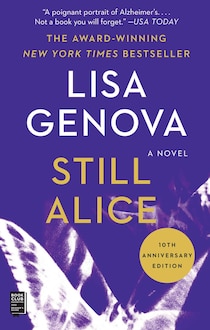
Betty gave us a little insight into the life of Lisa Genova, who wrote Still Alice, the book under discussion this month. The author's background is in bio-psychology and neuroscience. She self-published the book because publishers were apparently not interested in the beginning. Our group had previously discussed Left Neglected, also by Lisa Genova and very popular, but everyone enjoyed Still Alice better because of its readability. We are not alone in our high opinion of the book since Still Alice has garnered several prizes and was popular on the New York Times bestseller list. For those who wish to read more by Genova, her newest book is Love Anthony, about autism.
To say that we "liked" Still Alice would not be the right choice, almost too light a word. A better description would be to say that everyone appreciated it. The book was moving and insightful, but at the same time, anxiety-producing as it hit so close to home. We all related stories about friends and family afflicted with various forms of dementia, though not at such an early age as with Alice. We enjoyed the way the author was able to relate the story from Alice's perspective, rather than from an outsider's point-of-view. The book was well written, with good characterization, and even the Alzheimer's Society has endorsed it. The relationships between Alice and her husband and children were discussed at length. The feeling was that it is hard to build a strong relationship between spouses once a disease such as Alzheimer's sets in, if the foundation is not there beforehand. We were all pleased that the daughter Lydia and Alice ended up as close friends, though we felt that the book's ending was a little unrealistic. Would someone with such a debilitating disease really be able to set up a support group and make profound speeches the way Alice did? Betty commented that she had spoken to an Ottawa librarian dealing with a loved one with Alzheimer's. The librarian could not read the book and said there is never a happy ending with Alzheimer's.
Linda suggested a couple of other books to read with respect to Alzheimer disease:
Alzheimer's Disease: What if There Was a Cure? The Story of Ketones by Mary T. Newport, M.D.
Remembering the Music, Forgetting the Words - Travels with Mom in the Land of Dementia by Kate Whouley
All in all, a great choice, Betty. We would highly recommend the book to others.
Tuesday, November 27, 2012
Meeting of November 26, 2012
The meeting was hosted by Beth. She had some wonderful cheese, pâté and crackers including a lactose-free cheese along with olives and a date and amond cake. With tea and coffee we had a very nice stollen and quite decadent cupcakes.
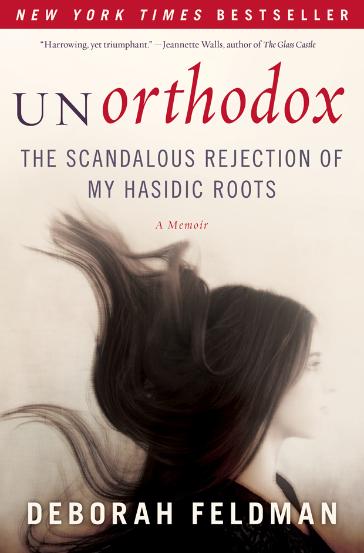
The book discussed this month, Carla's choice is Unorthodox - The Scandalous Rejection of My Hasidic Roots by Deborah Feldman. This is a memoir in which Ms. Feldman describes her life in the Hasidic community of Williamsburg in Brooklyn NY. She was born in Williamsburg and raised mostly by her grandparents after her mother left the community. Her father was the mentally disturbed son of her grandparents.
Hasidic Judaism is a Jewish religious movement that originated in Eastern Europe in the 18th century. The Hasidic tradition is a constant striving for an intimate give and take relationship with God in every moment of human life. (see link above). Satmar Hasidism is a Hasidic movement composed mostly of Hungarian and Romanian Holocaust survivors and their descendants. They believe that the Holocaust was punishment from God because Jews had become too secular and that the state of Israel was blasphemy because Jews had to wait for God to create the Holy Land. Most of the Jews praticing Satmar Hasidism are in the Brooklyn community, Williamsburg and Kiryas Joel, New York. There is a small community in Montreal and some scattered elsewhere in the state of New York.
The initial comments from the group were divided. Some of us found the book to be very interesting and a page turner and a couple of us found it boring and difficult to finish. However, the discussion was quite animated and all of us enjoyed an excellent discussion. Many enjoyed her narrative of life growing up with her grandparents her ability to remember childhood memories in such detail. It is a coming of age story. We learned a lot about the rules and regulations and traditions of Orthodox Jews and more specifically about the Hasidic Community. Some such as the demeaning treatment of women and the blame that was put on women for men's weaknesses were upsetting. Ms. Feldman describes an insular community with its own police and paramedics that allow crimes such as sexual abuse and maybe murder to be hidden.
From articles and reviews that have been written about this memoir it is very evident that Ms. Feldman wrote her own perception of life as a Hasidic Jew and left out details of her life that she believes were not relevant to her story. For example, we learn from articles that she had a younger sister and that she lived some time with her mother and attended a public secular school for the first few years of elementary school. Some of us questioned the veracity of her story. How could a young teenager who was curious enough about life to sneak off to the library and enjoyed reading in English as much as she did not be curious enough about her own body to know she had a vagina? Had she really not consulted a biology book at the library to satisfy her questions about the first night of mariage? It is also evident that she is very young and in writing about some of the incidents may not have thought through the impact on her family and community. She changes all the names but puts in the book photos of her family allowing easy identification of who is her family. She is surprised by the negative reaction of the community. However a more mature person would have known that no community likes to publicize its dirty laundry.
There is an article in the Jewish Week written by Samuel Katz, a young man who also left the community that gives some credibility to her story. However, Mr. Katz's hope that her book would begin an open discussion about the community has not happened because of the doubts about her story.
Beth read a poem Autobiograhical by the Canadian poet A.M. Klein who grew up in Montreal's Orthodox Jewish community that paints a much more positive picture of growing up in an Orthodox community.
So though not all members of the group enjoyed the book, we certainly had an excellent discussion. Thank you Carla for this choice of book.
Friday, October 26, 2012
Books and Meetings in 2013
This list will be updated as members choose their books.
Monday January 28, 2013 - Betty's choice, Still Alice by Lisa Genova, Janet hosting
Monday February 25, 2013 - Janet's choice, Alone in the Classroom by Elizabeth Hay, Betty hosting
Monday March 25, 2013 - Jolene's choice, The Help by Kathryn Stockett, Carla hosting.
Monday April 22, 2013 - Michèle's choice Rules of Civility by Amor Towles, Jane hosting
Monday May 27, 2013 - Linda's choice, No Time to Wave Goodbye by Jacquelyn Mitchard, Michèle hosting
Monday June 24, 2013 - Beth's choice The Unlikely Pilgrimage of Harold Fry by Rachel Joyce, Linda hosting
Monday September 23, 2013 - Shirley's choice, Deafening by Frances Itani, Janet hosting
Monday October 28, 2013 - Jane's book choice, Balzac and the Little Chinese Seamstress by Dai Sijie, Michèle hosting
Monday November 25, 2013 - Carla's book choice, Little Bee by Chris Cleave, Beth hosting
Monday January 28, 2013 - Betty's choice, Still Alice by Lisa Genova, Janet hosting
Monday February 25, 2013 - Janet's choice, Alone in the Classroom by Elizabeth Hay, Betty hosting
Monday March 25, 2013 - Jolene's choice, The Help by Kathryn Stockett, Carla hosting.
Monday April 22, 2013 - Michèle's choice Rules of Civility by Amor Towles, Jane hosting
Monday May 27, 2013 - Linda's choice, No Time to Wave Goodbye by Jacquelyn Mitchard, Michèle hosting
Monday June 24, 2013 - Beth's choice The Unlikely Pilgrimage of Harold Fry by Rachel Joyce, Linda hosting
Monday September 23, 2013 - Shirley's choice, Deafening by Frances Itani, Janet hosting
Monday October 28, 2013 - Jane's book choice, Balzac and the Little Chinese Seamstress by Dai Sijie, Michèle hosting
Monday November 25, 2013 - Carla's book choice, Little Bee by Chris Cleave, Beth hosting
Meeting of October 22, 2012
This meeting was hosted by Shirley. Present were Betty, Carla, Colette, Jane, Janet, Jolene, Linda, Michèle et of course Shirley. Shirley had some lovely English cheese, spicy lamb sausage with mint sauce and a wonderful chutney, wine of course, coffee and tea. And she had a sublime dessert, pots de crème citronée. The recipe is at the end of this post.
The book discussed this month is Major Pettigrew's Last Stand by author Helen Simonson. Ms. Simonson, originally from England lives in Brooklyn, New York. This is her first novel. Major Pettigrew's Last Stand is a story of a retired gentleman, Major Pettigrew and the clash between the traditional and sometimes rigid values and customs of a small English village and the new modern England. Major Pettigrew, the vicar and his wife, other original residents members of the village golf club and the local manor owner seem to live in the past, shooting parties, restricted membership at the golf club and little connection to the new ethnic Brits who are moving into the village. The Major's son Roger, his girlfriend and the younger generation have no respect for tradition. The balance is further upset when Major Pettigrew's friendship with Mrs. Ali, the owner of a local shop and a British born of Pakistani origin grows to a love interest. He finds himself torn between his traditional values and customs and his growing concern for the disdain his friends and neighbours have for those unlike themselves.
We all enjoyed the book and found it to be a good sumer read. The characters are well-developed, we can picture not only the main characters such as Major Pettigrew and Mrs. Ali but minor characters such as his neighbour who "steals" some of his plants and participates in the protests against shooting parties, Mrs. Ali's nephew who has decided he must follow the traditions of his Pakistani origins. Many of the characters are given exaggerated personalities that highlight the perceived negative characteristics of traditional Brits, immigrant families who refuse to moderate their traditions and customs inappropriate to modern day England and younger generations such as Roger, the Major's son who is obsessed with climbing the corporate ladder, exploiting all connections.
We had a discussion about racism. Core values, cultures, religion and/or life style are so different. Is it just racism or a lack of flexibility and knowledge that keep people from understanding and accepting the differences? We saw the lack of acceptance not only amongst the people of the village but also in the actions of Mrs. Ali's family.
Some thought that the second part of the book lacked structure and felt that some of incidents were not plausible. However others liked the predictability and that you could telegraph what would happen. The incidents at the annual golf club gala were easy to predict and Major Pettigrew's paralyzing non-action when Mrs. Ali is humiliated is evident. He well knows that the actions of his neighbours and friends are inappropriate but he is unable to react appropriately right away.
We all knew that the decision the young couple Abdul and Amina made to live separate lives was wise and we all wondered if Major Pettigrew and Mrs. Ali's relationship would survive the differences in their culture and the reactions of neighbours and family.
A good choice Jane. Thank you!
Here is the recipe for Shirley's sublime dessert from the book "Three Chefs, the Kitchen Men" by Michael Bonacini, Massimo Capra and Jason Parsons. A White Cap Madison Press Book.
Pot de crème citronée avec petits fruits
2 1/4 cups of whipping cream
2/3 cup of sugar
1/4 cup of lemon juice
In a medium pot, combine the cream and
sugar and bring them to a simmer, stirring
until the sugar has dissolved. Remove from heat and stir in the lemon
juice. Pour the mixture into 6 ramekins or
bowls and refrigerate for at least 4
hours. Garnish with fresh berries, mint and a bit
of icing sugar.
It takes less than 15 minutes to prepare and is absolutely sublime! I have made it already for company and it was a big hit. Thanks Shirley.
Wednesday, October 10, 2012
Meeting of September 24, 2012
This meeting was hosted by Jolene. Present were Beth, Betty, Carla, Jolene, Linda, Michèle and Shirley. Jolene made a lovely ham and cheese pastry roll. The book discussed this month's was Shirley's choice Left Neglected by Lisa Genova. Ms. Genova who is a neuroscientist, has written two other novels, all related to the functions of the brain, Still Alice whose main character has Alzheimers and Love Anthony about an autistic child.
Left Neglected is the story of Sarah and her family and how they cope with a neuropsychological condition she is left with after a car accident. Left neglected is a condition in which deficit in attention to and awareness of one side of space is observed. Sarah and her husband are type A personalities and organize their life in a "type A atmosphere" with three children, two homes and plenty of activities scheduled around their high-powered work lives. When Sarah has a car accident, her husband tries to continue the same lifestyle with the help of Sarah's mother. Sarah in a rehabilitation centre and with physiotherapists tries to get back all her physical and psychological abilities so she can jump back into their type "A" lives.
Generally the book was enjoyed by all members. We all felt that Ms. Genova's medical background made the description of the condition and its impact very realistic and the rehabilitation Sarah had to go through credible. However we also found the writing style a bit choppy and the stream of consciousness with Sarah was sometimes too much. This can be because of Ms. Genova's scientific background and better editing could have corrected it.
There were several relationships that were well developed, Sarah and her mother, Sarah and her son Charlie, her relationship with her therapists. Hoewever, some of us would have liked to see better development of Sarah's relationship with her husband Bob. All found that Ms Genova's desciption of their family life before Sarah's accident was well done and gave us a good picture of life on a treadmill. Ms. Genova also did a very good job of describing Sarah's difficulities coping with the limitations her condition caused, the step by step therapy she experienced and the humbling experiences she went through because of her condition. A good example of this is their night out to their favourite restaurant to celebrate their anniversary.
The story has a happy ending and though some of us thought the end of the story was too quickly wrapped up, most were particularly pleased to have read a book with a happy ending!
Linda reminded us that a lesson learned from this story is that we must all appreciate what is important in life and not neglect our family, friends, and the life around us. She has given us a challenge for our next meeting to report back about at least one thing we have done that we keep putting off that would give us or someone else some satisfaction.
Another book was suggested for those who would like to read on similar topics, My Stroke of Insight by Jill Bolte Taylor.
Thank you Shirley for an interesting read!
Thursday, July 26, 2012
Meeting of June 25, 2012
This meeting was hosted by Linda at Shirley's home. Present were Beth, Betty, Colette, Janet, Jolene, Michèle and Shirley. Linda provided the hors d'oeuvres and wine but unfortunately was not able to come to the meeting. The book recommended was Beth's choice, Vaclav and Lena by Haley Tanner.
The story revolves around the lives of two young russian immigrants in New York who meet in an ESL class at school. Vaclav who lives with his parents is fascinated by magic and wants to perform as a magician on the boardwalk of Coney Island. Lena's childhood at the beginning of the story has been much less stable. She spends all her time at Vaclav's home and is his beautiful magician's assistant.
All members enjoyed the book and found it an easy read, an excellent "visual" story. The descriptions of Vaclav's home, the kitchen, the smells of borscht, the living room and Vaclav's father sitting on the sofa with his vodka are easy to imagine. Ms. Tanner's descriptions allow us to picture the characters and their surroundings as we read the story. She uses, in dialogue a choice of words that lets you "hear", as you read, the accent of immigrants from Eastern Europe. An excellent example, in the first part of the book is Vaclav speaking to Lena as he convinces her that practicing the magic tricks is essential. "Lena, what we are having here is perfect introduction to the act."
We also found that the principle characters in the novel are well developed and scenes well described. We can feel Rasia's, Vaclav's mother, love for her son. The description of Lena's "grandmother" dead in the shower and Lena's reaction as a 5 year old child who has been deprived of love and affection is very easy to imagine. We identify with Lena's teenage angst in the school bathroom when she locks herself in one of the stalls on her 16th birthday.
Some of us found the ending a bit abrupt and wondered if there will be a sequel. Thank you Beth for a good choice as our book before the summer break.
Sunday, June 3, 2012
Meeting of May 28, 2012
This meeting was hosted by Colette. Present were Beth, Colette, Jane, Jolene, Linda, Michèle and Shirley. This month's book was The Best Laid Plans by Terry Fallis presented by Linda. The book was recommended to Linda by a teacher and librarian. She read both this book and Mr. Fallis' second book The High Road that is a sequel. After she read the books, she decided that a book that gave us the chance to laugh was a good choice. Mr. Fallis won the 2008 Stephen Leacock Medal for Humour and The Best Laid Plans won the 2011 Canada Reads competition.
All of us agreed that it was a very pleasant and interesting book. Even Michèle who prefers dark, dramatic books enjoyed the story. The story is about a political speech writer for the Liberal Party who wants out of the political life as an election is about to be called. To appease his feelings of guilt of leaving the Liberal leader high and dry, he agrees to find a liberal candidate for an Ottawa area riding that has not voted liberal for decades. He ends up managing the campaign with little money and no input from the candidate.
We all related to the local settings, the Cumberland-Prescott riding, Parliament Hill, downtown Ottawa, downtown Cumberland, the University of Ottawa. All of us could "see" in our minds places that he described in the book. The characters were well developed and easily imagined. Angus was definitely the favourite character from the book. The diary that Angus wrote to his departed wife, Marin Lee, a well-known feminist was moving and allowed us to see a side of Angus that was not evident in his everyday discussions with Daniel; Angus' way of pushing through the grief. It was a favourite part of the book for many of us. The twists and turns of the campaign had all of us turning the pages and wondering what would happen because of course, we all knew there had to be some way Duncan Angus McLintock would win because that is where the story was going!
Linda wrote to Terry Fallis and arranged for us to Skype with him during our meeting. We all found it very easy to speak to him and several of us asked questions and related some of our observations. We asked if political pundits noted that he had an incident of "robocalls", directing voters to fictitious polls in his book way before the scandal of the Canadian 2011 federal campaign. Did someone copy the idea from his story? It was very generous of him to give us of his time on a Monday evening. Mr. Fallis' next book is Up and Down, to be published in September 2012 is about astronauts, a departure from his politically based novels.
We offered to give him a tour of the riding of Cumberland-Prescott the next time he comes to Ottawa. Though Mr. Fallis described the riding fairly well, he admitted to us that he has never actually been to Cumberland!
Thank you Linda for an excellent choice, great book to read; laughter is good for the soul!
Saturday, April 28, 2012
Meeting of April 23, 2012
Janet first read the book in 1998 when she was living in South Africa with her family as a Ph.D. student. Alan Paton wrote the book in 1946 as he was travelling the world visiting reform schools in different countries. It was first published in 1948 in the United States a few months before Apartheid laws were adopted in South Africa. The book was banned in South Africa. It is sometimes considered as South Africa's version of Uncle Tom's Cabin. As Harriet Beecher Stowe's novel highlighted slavery and the abolitionist movement in the United States, Cry, the Beloved Country showed how segregation, that existed even before Apartheid, contributed to the "brokeness" of tribal culture and left many Africans without the traditions and support of their tribes. A way of life that provided meaning and purpose was fast disappearing, leaving the young people searching and no reason to remain in their villages. It is very similar to what has happened to our Aboriginal communities in Canada.
The novel is about two fathers searching for their sons. Stephen Kumalo's who is a Zulu priest and a white landowner James Jarvis. In the context of the stories of these two men, the author Alan Paton, develops several themes, family relationships, good and evil, temptation, forgiveness and reconciliation. Both men find themselves journeying to Johannesburg.
We first meet Stephen who originally goes to Johannesburg after receiving a message that his sister Gertrude is in trouble. He goes, hoping to also see his son Absalom and his brother John. He finally finds his son, but only after Absalom has murdered James Jarvis' son Arthur. Stephen is heartbroken by the events that take his sister back to a life of disrepute and his son to execution. However, the kindness of people he meets that help him in Johannesburg gives him hope and he goes back to his village with a sense of peace.
We meet James Jarvis, who is from the same region as Stephen, when goes down to Johannesburg to claim his son's body after he is murdered and discovers Arthur's beliefs as he reads through his notes. He realizes that he has lived in a cocoon, ignoring what has gone on outside of his farm. He reads Abraham Lincoln's Gettysburg address that he finds in Arthur's house. As he reads more and more of his son's writings, he begins to rethink his relationship with the villagers that live near his farm.
Everyone loved this book and several of our members quoted passages from the book. Arthur's text in chapter 21 that James reads begins "The truth is that our civilization is not Christian it is a tragic compound of great ideal and fearful practice, of high assurance and desperate anxiety, of loving charity and fearful clutching of possessions. Allow me a minute. . . ."
There is the text in chapter 11 that gives the book its title and reminds us that though South Africa is a beautiful land, the problems caused by the separation of the races are grave and ingrained and there is still a long road ahead before all that South Africa has to offer can be embraced.
"This is no time to talk of hedges and fields, or the beauties of any country. . . . Cry for the broken tribe, for the law and the custom that is gone. Aye, and cry aloud for the man who is dead, for the woman and children bereaved. Cry, the beloved country, these things are not yet at an end."
And of course there is also the quote from the Mission House Minister, Msimangu who greets Stephen, helps him find his sister Gertrude, and finds him a place to stay. Msimangu fears that antagonists such as John Kumalo, Stephen's brother, will bring hate.
"I see only one hope for our country, and that is when white men and black men . . . desiring only the good of their country, come together to work for it. . . . I have one great fear in my heart, that one day when they are turned to loving, they will find we are turned to hating."
Everyone agreed that this is an eloquent and powerful book that has become a modern classic, still read in classrooms everywhere. The characters were well developed and as a reader you engaged with them. You hoped that Gertrude would succeed in making a better life for her young son. You felt for Stephen every time he gave in to his weaknesses and cheered when he was hopeful. The descriptions of the countryside give you images of the beauty South Africa has to offer.
Thank you Janet for this wonderful book choice.
Subscribe to:
Posts (Atom)